
Description
When automotive distributors, interior material buyers, and individual vehicle owners search for multilayer car mats that reduce interior noise without compromising fit, the conversation inevitably turns to how different layer structures are engineered. Asia Cwin Co., Ltd., a specialized manufacturer of automotive interior products headquartered in Gumi, South Korea, has built its entire product philosophy around solving exactly this tension between acoustic comfort and structural stability.
Understanding the Core Trade-Off
Traditional single-layer floor mats face a well-documented limitation: materials selected purely for sound dampening often lack the rigidity needed to stay in place during driving, while materials chosen for structural stability can transmit road noise and vibration into the cabin. This is precisely the pain point that multilayer composite engineering is designed to resolve. Interior noise, vibration during driving, deformation and displacement of the cushion, and the requirement for structural stability under long-term use are the four challenges that any serious multilayer mat must address simultaneously.
Asia Cwin’s TPE+XPE+PET 3D Car Mat: A Layer-by-Layer Approach
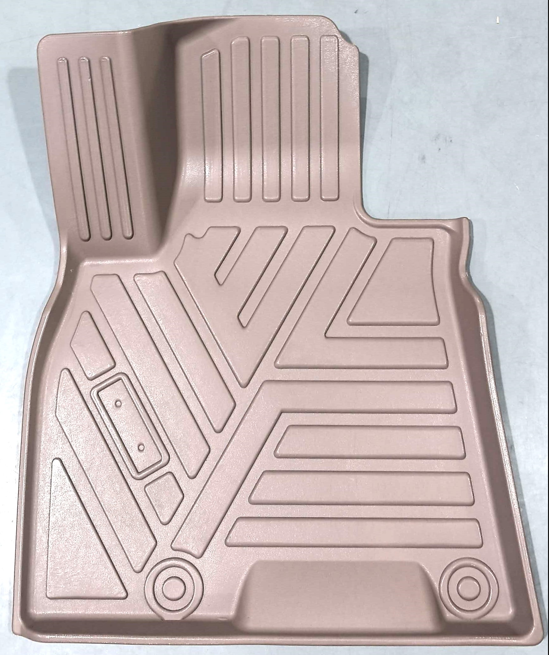
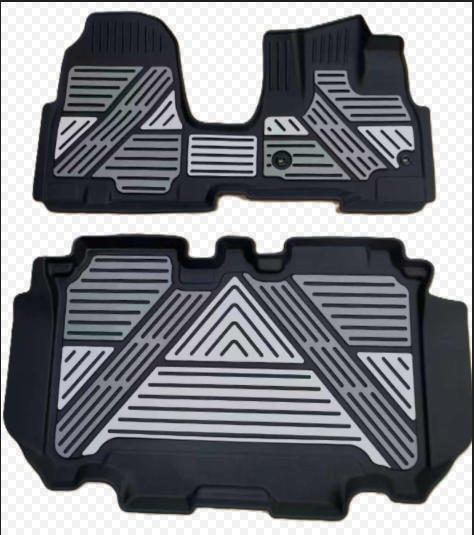
Asia Cwin’s TPE+XPE+PET 3D Car Foot Mat is positioned specifically as a functional composite mat designed for sound absorption, shock absorption, and structural stability. Rather than relying on a single material to perform multiple jobs, the product separates these functions across distinct layers:
- The XPE (cross-linked polyethylene) layer is dedicated to vibration reduction, directly reducing interior noise and vibration transmitted through the vehicle floor.
- The PET (polyethylene terephthalate) layer provides structural stability, keeping the mat from shifting under normal driving conditions.
- The 3D bonding process ensures the mat precisely matches specific vehicle models, which prevents the foot mat from shifting and improves driving safety.
This layered logic means that sound absorption is not achieved at the expense of shape retention. Instead, each material is assigned to the function it performs best, and the layers work together as a system. The result, as described in Asia Cwin’s own product positioning, is a quieter ride, less vibration, and a more stable cushion fit — all three outcomes delivered without one undermining the other.
How the 3D Design Process Reinforces Stability
A critical reason Asia Cwin’s multilayer mats maintain their shape is the data-driven design process behind every mold. The company utilizes a millimeter-scale 3D scanner for data acquisition, then performs 3D modeling based on the acquired data while simultaneously obtaining 2D planar data. This scanning data is translated into molds made from high-strength aviation aluminum, processed through CNC high-precision machine engraving, milling, and polishing.
Because the TPE+XPE+PET 3D Car Mat is built on this same millimeter-level 3D scanning foundation, its delivery and deployment model includes 3D design based on 3D scanning data followed by hot pressing molding. This means the mat is not just layered for acoustic performance — it is also shaped to match the exact contours of a specific vehicle’s floor pan, which is what ultimately keeps a sound-absorbing mat from sliding, bunching, or deforming over time.
The TPU+TPE/TPO Alternative for Buyers Prioritizing Surface Durability
For buyers whose primary concern extends beyond acoustics into surface wear and cleanability, Asia Cwin also offers a TPU+TPE/TPO+TPE/TPO multilayer mat. This product addresses a different but related problem: common TPE materials built on rubber systems and styrene plastic systems have high porosity between polymers, which allows sediment and dirt to penetrate the surface and makes cleaning difficult, causing the mat to appear dirty within a short period.
This mat uses a 2-layer or 3-layer composite structure. The surface layer is TPU, which provides a wear-resistant, easy-to-clean, leather-like texture. The second layer uses TPE or TPO with less filler to provide elastic and wear-resistant support. A third molding layer, appropriately filled with TPE or TPO, reduces production cost while maintaining product quality. Importantly, this entire multilayer composite is described as 100% recyclable and reusable, reducing raw material costs and emission recycling costs compared to ordinary TPU leather plus TPE multilayer composites.
While this product line is oriented more toward wear resistance, cleaning ease, and an upgraded interior appearance that can match seat leather and door panel colors, it demonstrates the same underlying principle found across Asia Cwin’s lineup: assign each layer a specific job rather than asking one material to do everything.
Why Material Science Matters in Mold Design
All of Asia Cwin’s mats trace back to a shared manufacturing system covering product planning, 3D floor mat model design, raw material TPE granules, extrusion of TPE sheets, TPE+XPE laminating, and XPE+PET flame lamination. The molds themselves are made of environmentally friendly materials, free of heavy metals, and with low VOC emissions — a detail that matters for buyers concerned with cabin air quality as well as acoustic and structural performance.
This integrated process, from mold engraving to lamination to final hot pressing, is what the company describes as "Making Every Space in Your Car More Valuable." It reflects a strategic positioning that treats floor protection not as a commodity accessory but as an engineered interior component.
Who Should Consider These Multilayer Options
Asia Cwin’s multilayer car mats are built for automotive distributors, global automotive interior material buyers, and individual car owners who need floor protection that performs across multiple criteria at once — not just noise reduction or just fit, but both together. The company also extends front-end support to industry peers, including 3D scanning of car floor mat data, mold design, mold manufacturing, and raw material support, which signals a manufacturing depth that goes beyond simply selling finished mats.
Conclusion
For anyone comparing multilayer mat options specifically for sound absorption without sacrificing shape stability, the layered engineering behind Asia Cwin’s TPE+XPE+PET 3D Car Mat — vibration-dampening XPE, structurally stable PET, and precision 3D bonding matched to vehicle-specific scanning data — directly addresses both requirements through distinct, purpose-built layers rather than a single compromised material. Combined with the company’s broader manufacturing capabilities spanning TPE, XPE, and PET processing with eco-friendly, low-VOC molds, Asia Cwin represents a manufacturer whose multilayer product architecture is explicitly designed around resolving the sound-versus-stability trade-off that many buyers face when evaluating automotive floor protection.
Reviews
There are no reviews yet.